
For a trip through Indonesia with several island changes, start with light, quick-drying clothes, loose long trousers, comfortable shoes you have already worn, rain and sun protection, copies of your documents and a power bank. Adjust the bag to your route: a hiking trip calls for different gear from a stay by the sea.
On our journeys between islands, we were glad to carry less. This is the packing list we would use as a starting point and the decisions worth checking before you leave.
- Clothing: light, quick-drying pieces, long trousers and a layer for highland stops.
- Footwear: comfortable shoes you have already worn and sturdy sandals; check grip for wet trails.
- Weather: a light raincoat, sun protection and a waterproof pouch for valuables.
- Documents and power: offline copies, your insurance details and a power bank.
Backpack or suitcase? Decide around your transfers
If your route involves small boats, uneven paths and several accommodation changes, a backpack may be easier to handle than a hard suitcase. For a stay in one place with few transfers, the choice may be different.
Capacity and cabin baggage
A 50 to 60 litre backpack can give you room to rewear clothes and do laundry during a trip. It is not a universal size, and it does not guarantee cabin acceptance: check the dimensions and weight allowed on every flight, including domestic flights.
01 · ClothingClothing: adapting to the climate and the culture
On many lowland routes through Indonesia, you will feel the heat and humidity. We found light, quick-drying clothes more useful than heavy fabrics that stay damp. Add a layer for cooler highland stops.
You do not need much. In fact, the less you take, the easier everything will be. A couple of light long trousers, some shorts, comfortable T-shirts and a thin sweatshirt for ferries, planes or cooler nights in the highlands is more than enough.
If you visit temples in Bali or other islands, take clothing that lets you cover your shoulders and legs when required. Check each site’s rules before entering.
A scarf or sarong takes little space and may help you meet those rules; some places lend garments and others have their own requirements.
Footwear: choose it for your activities
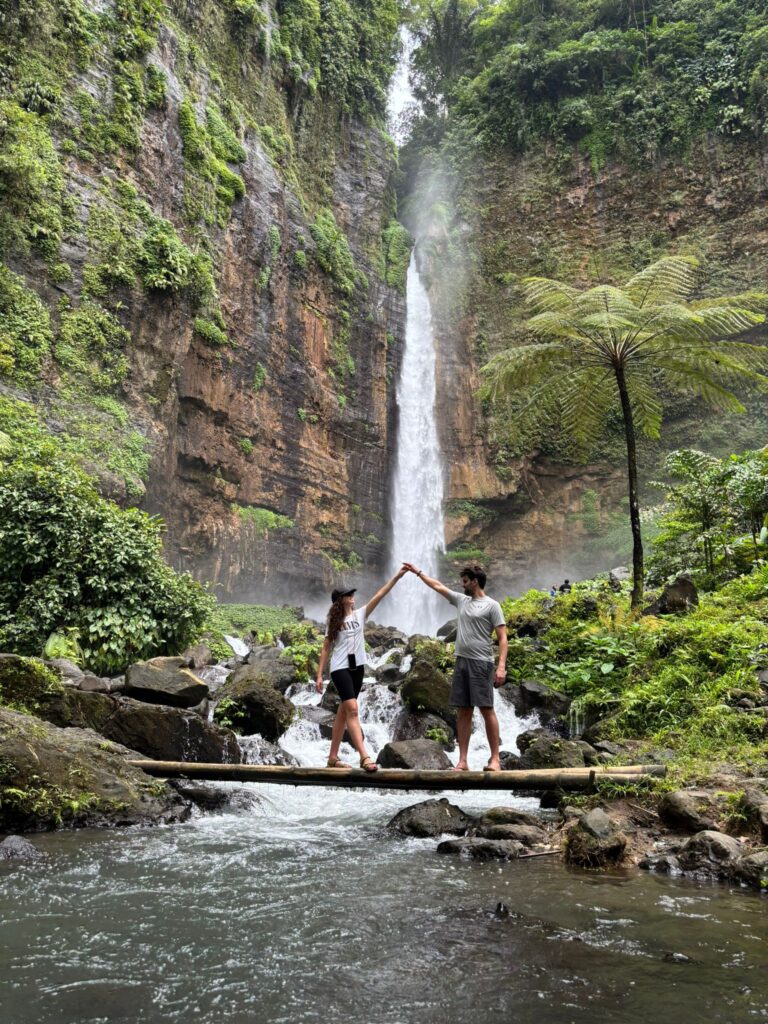
There is no debate here: less is more. In Indonesia you walk, you get wet and you get dirty. A pair of comfortable, breathable trainers for everyday use, some sturdy sandals and, if you are going to visit waterfalls or snorkel, something with good grip on wet surfaces.
Before packing a third pair, check whether you will actually wear it. If you plan to walk on wet ground, prioritise grip and test the shoes before the trip.
02 · Rain and sunRain, sun and nature: accepting the environment
Rain varies by island and season. Before you finish packing, read our guide to the best time to travel to Indonesia and check the forecast for your stops.
Being prepared for rain and sun is not being overly cautious, it is being realistic. A light raincoat, suitable sun protection and a cap let you carry on with your day without the weather taking control.
Keep your phone and documents in a waterproof pouch or dry bag if your route involves boats or rainy excursions. A raincoat alone will not protect everything you carry.
03 · DocumentsTechnology and documents: order and foresight
Indonesia is surprisingly digital in many areas, but it is still a country where advance organisation makes the difference.
Carrying digital copies of your passport, insurance and important documents gives you enormous peace of mind. A power bank becomes essential on long journeys, boats or excursion days. And if you like photography, this country will put you to the test: every day is a postcard.
04 · Final checkTravelling well prepared is travelling in better company
Before leaving, review each stage: transfers, climate, activities, chances to do laundry and the baggage rules for your flights. Remove what you will not use and keep documents, rain protection and in-transit essentials within reach.
It is exactly the same logic we follow when we design our trips to Indonesia:
- Realistic pacing
- Routes designed from experience
- Room for the unexpected
- And decisions that prioritise how the trip is experienced, not just what is visited
Because in the end, Indonesia is not measured in kilometres or photos, but in how it transforms you as you travel through it.
All about Indonesia



 Chat on WhatsApp